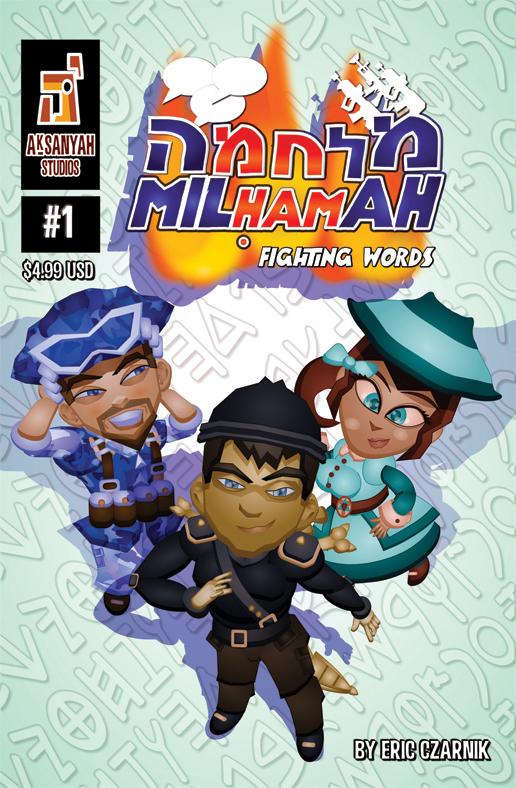
If you didn’t get a print copy of “Milhamah: Fighting Words” Issue #1 — sure to be a collector’s item! — at the Motor City Comic Con, you can now buy it at several stores.
If you live in the metro Detroit area, the following stores now carry copies:
Comics & More: 28059 John R Road, Madison Heights, Michigan 48071
Look forward to additional stores carrying “Milhamah” soon. In the meantime, people outside the metro Detroit area can buy “Milhamah” at my Storenvy store.
New updates to the “Milhamah” story are coming next week. Keep following for more updates!
May 17-19 was the 2019 Motor City Comic Con, and Aksanyah Studios was there to sell print comics of Issue #1 of “Milhamah: Fighting Words”!
Issue #1 follows the adventures of Shem ‘Etzem (the noun), Tiqwah Tawit (the article) and Etgar Toar (the adjective) — three linguistic warriors of the Holy Tongue Society. The new print edition contains remastered pages and additional exposition not found in the webcomic.
While at the comic con, I sold 33 copies of the comic, or about one-third of my first print run. Some stickers and prints sold too.
From here, I look forward to making the comic available in metro Detroit comic book shops. The goal is to get back to work on finishing the current story arc and proceeding to the next one while producing enough content for an Issue #2. An Indiegogo or Kickstarter campaign could fund a large-scale print of #1 and #2, plus the UPC codes that will let the comics be sold by national retailers.
I apologize for the lull in new “Milhamah” content, but much more will be on the way in June!
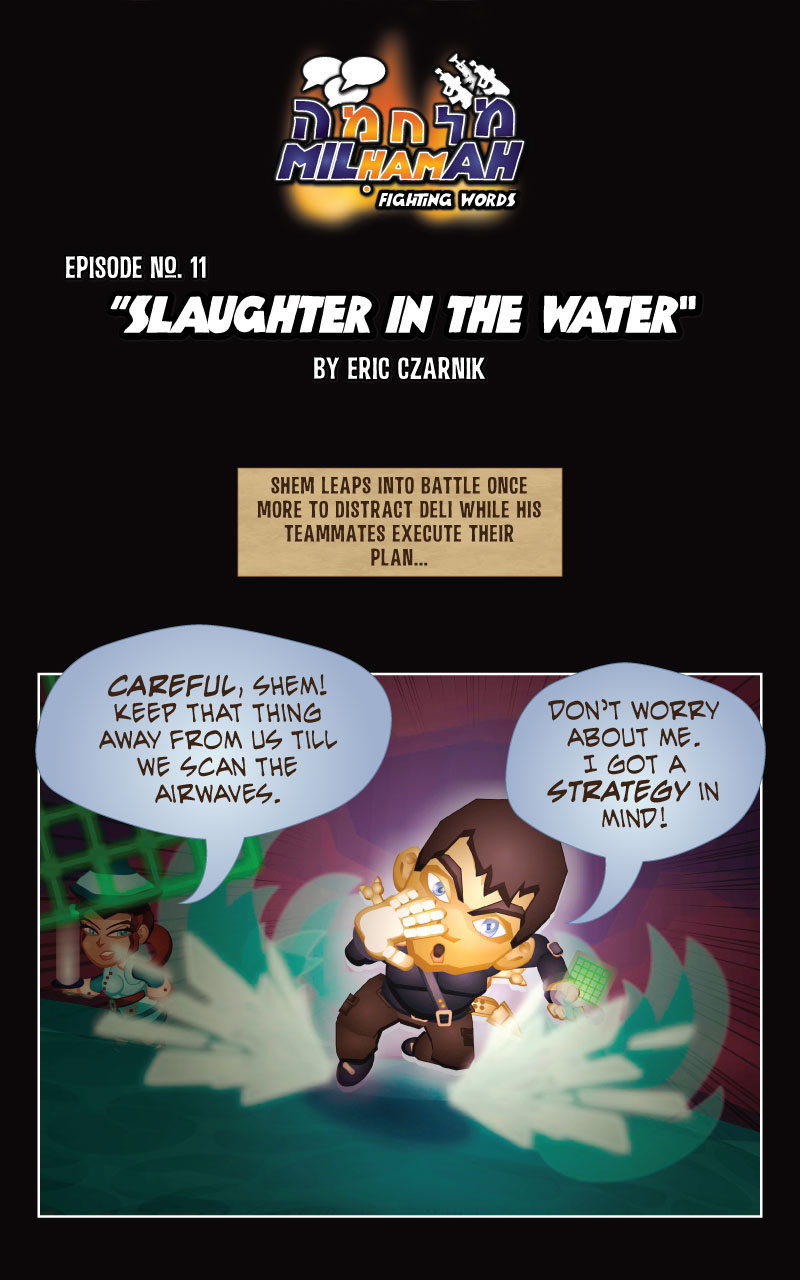
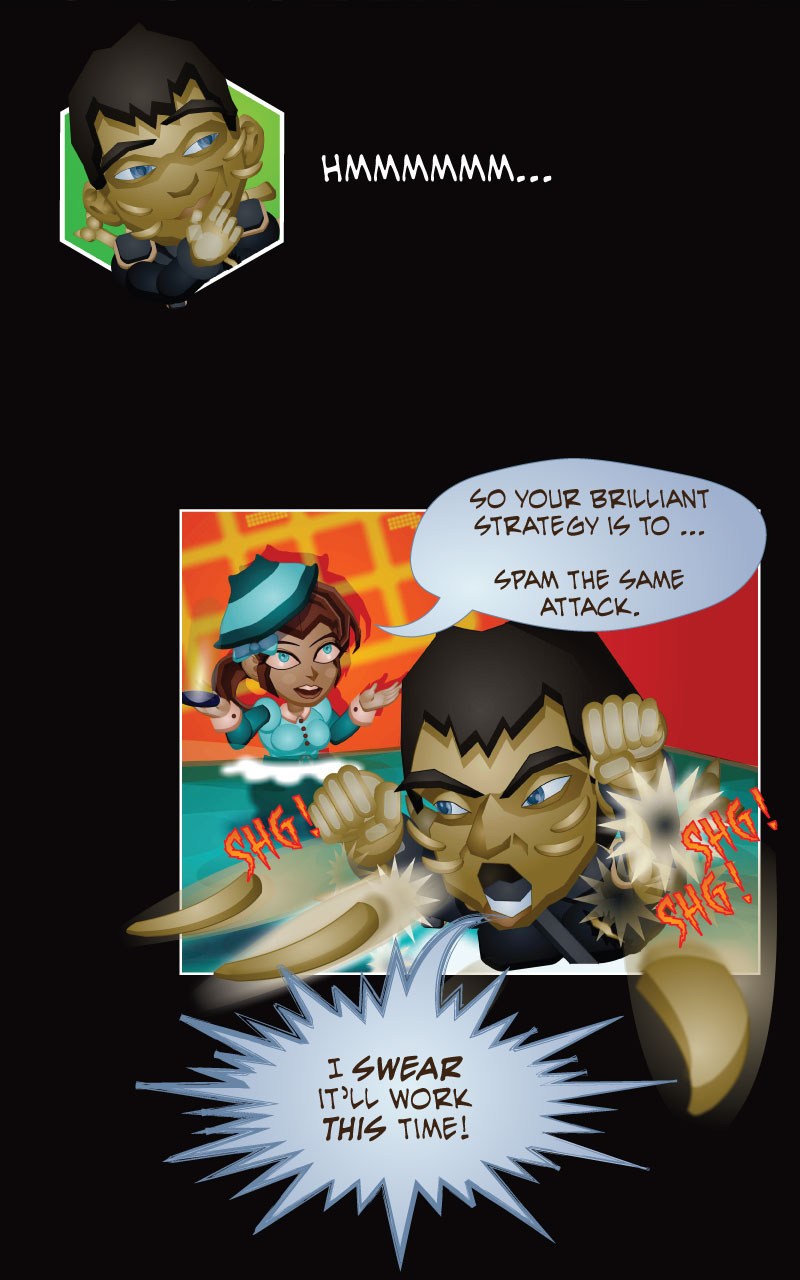
This new episode’s first part isn’t exactly a slaughter, but good and evil go at it for another round. The last time “Milhamah: Fighting Words” had this much fighting between Shem and Deli, Shem took a walloping. Check and see what happens here…
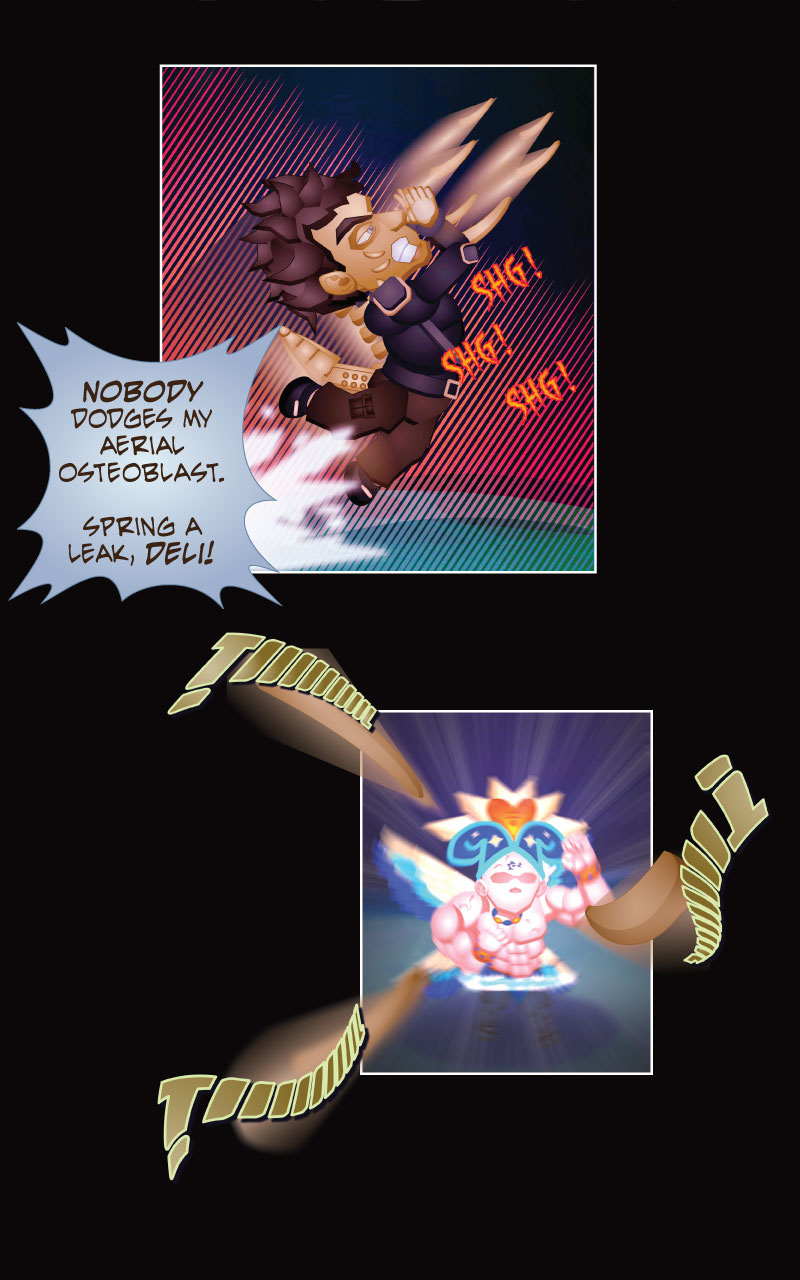
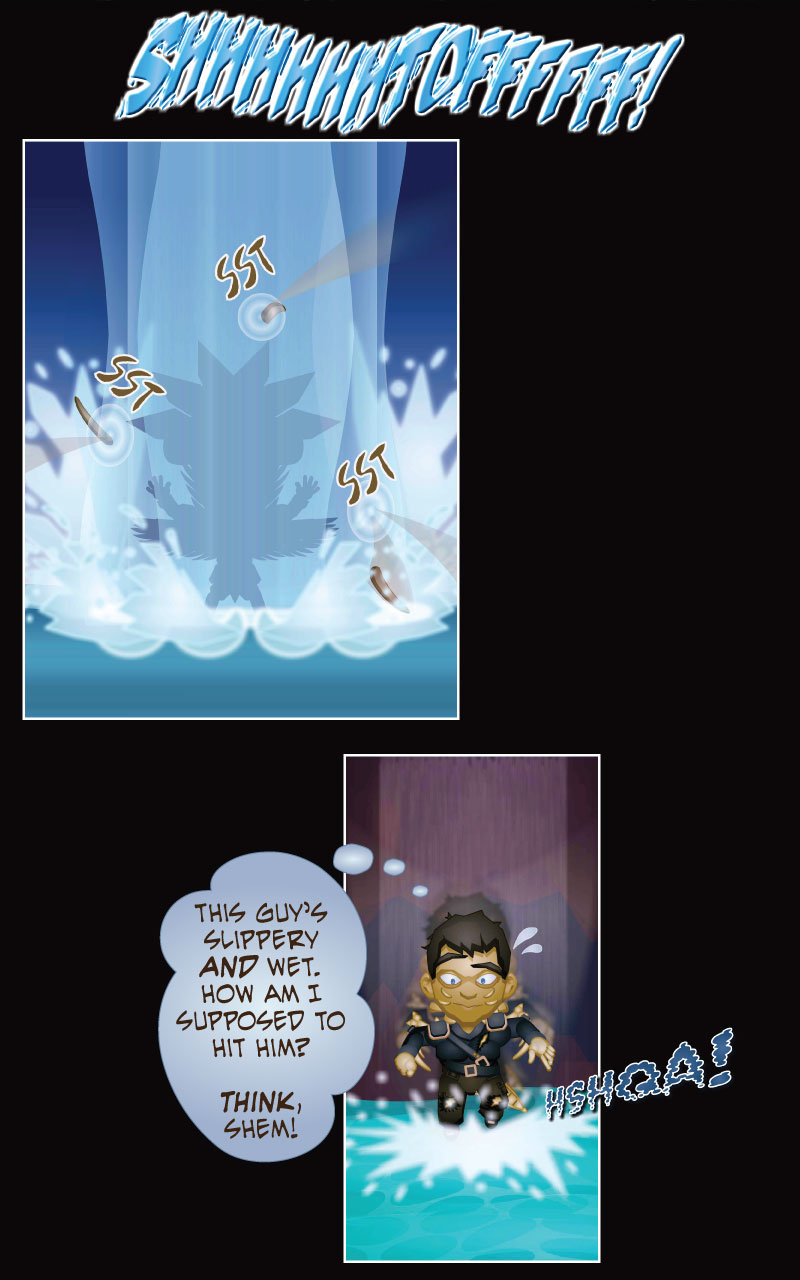
Action scenes always take more time to design than talking head panels, but the end result is often satisfying. This time I tried to make things more dynamic by breaking the panel’s perspective with Shem’s “osteoblast” bone shard missiles.
I also added more sound effects and used the negative space outside the panels to contribute to the storytelling. I’ll probably do that more, especially in my remastered print edition. The goal is to begin selling copies in April with a couple of comic cons on the horizon!
Storywise, while Shem’s limited attack moves are a punchline here, I look forward to giving him more to work with in the scenes to come. Plus we need to see what Etgar and Tiqwah are doing in Episode 11 Part 2!
In other news…
Just a reminder: You can also see “Milhamah” comics on Tapas and Webtoon. I’m trying to grow those subscriber bases, so if you use those sites, you can get automatic notifications when new episodes come along.
Also, you can vote for “Milhamah” on the Top Webcomics page site, which draws a lot of webcomic fans. I’ll be promoting this more in the near future. Help this series climb the ranks!
After learning about Semitic languages in November, our journey through the Joüon and Muraoka book continues. This time we’re going specifically through the history of ancient Hebrew.
Biblical Hebrew is fairly consistent throughout the centuries. The Bible’s writers, from earliest to latest, differ most in vocabulary. Some of the syntax also evolves, though it’s not that significant. Morphology, or word formation, changed the least due to stable consonants.
However, Joüon and Muraoka point out that the following Mishnaic Hebrew era strays farther from the biblical style conventions. However, they speculate that some Mishnaic-era writers still wanted to write in the Bible’s older style and format.
And they say Mishnaic Hebrew started to form after most of the Tanakh (Old Testament) was finished. The Mishnaic era also covers the period of the Dead Sea Scrolls and Jesus.
Joüon and Muraoka divide the biblical language into two eras: a “golden age” before the Babylonian exile and an era afterward. The authors acknowledge that some scholars think the entire Bible was basically written after the exile. But Joüon and Muraoka point out linguistic differences, such as the Bible’s later books spelling “Jerusalem” and “David” in a way earlier biblical books didn’t.
Hebrew’s relationship to ‘Milhamah’
The “Milhamah” webcomic doesn’t glean too much from this history. However, the character of ‘Aravah ‘Ivrit, whom I unveiled last week for Hebrew Language Day, embodies the language. Some of the details are in that post.
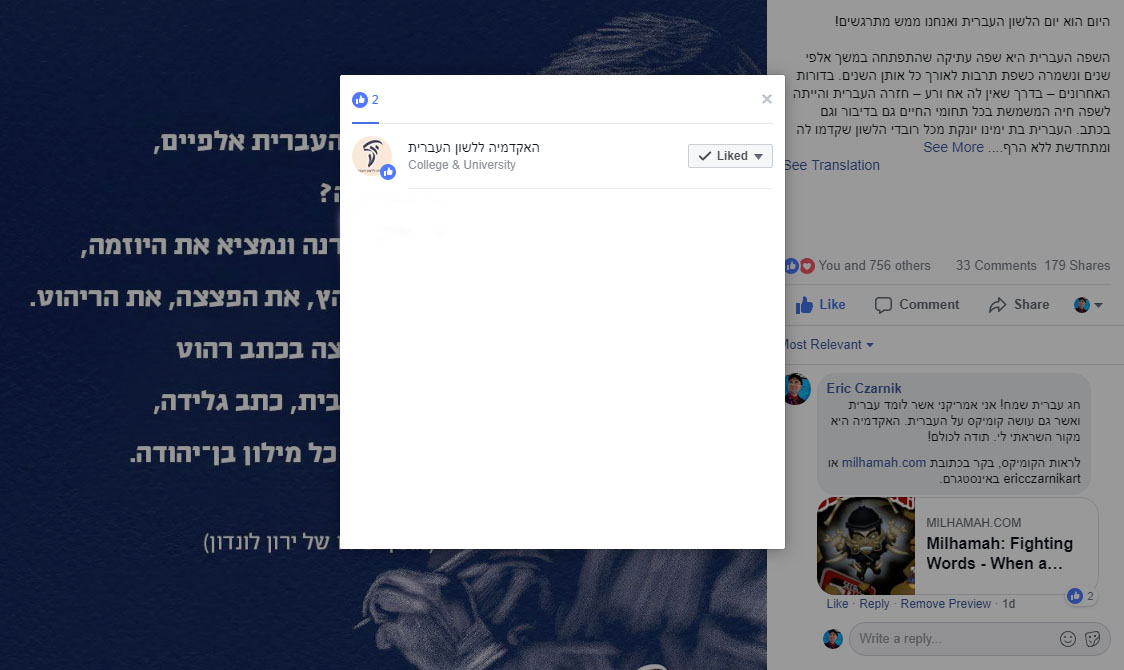
My art drew quite a few people from Facebook to this website. I even earned a Facebook like from the Academy of the Hebrew Language, which chiefly promotes the holiday in honor of Hebrew revivalist Eliezer Ben-Yehuda. Their resources are a great help to my comic research, and I let them know that.
Need a quick gift idea? Several of my artistic designs are available for sale on the new Milhamah Redbubble store. The artwork can be applied to merchandise such as T-shirts, mugs, art prints, cellphone cases, greeting cards and much more. Many more designs will be posted in early 2019, so keep checking it out!
Meanwhile, “Milhamah: Fighting Words” Episode 10 is still on the way and will be here before Christmas—it just grew a little longer than expected. And then I have one more surprise in 2018…
Milhamah: Fighting Words
Feeling silenced by the world? Join the Holy Tongue Society’s linguistic warriors as they use ancient alphabet powers to fight speech stranglers, truth manglers and a rebuilt Tower of Babel. And get immersed in a story that prizes freedom, candor and fighting back against overwhelming odds.




You must be logged in to post a comment.