






Meanwhile, Daniel Kennemer writes in The Times of Israel about the etymology behind the root ר-ש-ף. It can mean fire, plague, birds, demons and even a Canaanite god named Reshef or Rishpu:More surprisingly, it is not cognate with the word hadbara – “extermination.” That word comes from a third Hebrew root, which meant “to follow behind” or “to push forward.” This meaning led to the word midbar – “desert,” which was a place where cattle were pushed forward to graze. In the more intense hifil form of the verb, hidbir, “pushing forward” became “subdue, overwhelm,” and from there came the meaning “to eliminate, exterminate.” (“Yadber sonenu,” we recite in the Prayer for the I.D.F., asking God to “subdue our enemies.”)
Lastly, author Jeremy Benstein writes about the linguistics of infection related to the root ד-ב-ק, tying it to Deut. 28:21. He also notes the root’s sexual and secular meanings, as well as spiritual ones such as “spiritual closeness with God” and the antithesis of:“He spread epidemics and death. […] He is represented with a shield, a club and a lightning bolt,” according to one summary.
Whether our modern anxieties call to plagues, pagan gods or demons, the sickness of our age is obvious. It’s all the more reason why we need heroes armed with candor and dedication.when an evil spirit clings to a person, a sort of demonic possession, known as a דיבוק dybbuk, made popular in the play by S. An-sky of that name.


 This pilferer belongs to a group of former farmers who were born with sticky fingers instead of a green thumb. His pliers burst into flames to ward off anyone who wants to take back what he acquires.
The pilferer’s shoresh root is לקח, which carries connotations of taking, acquiring and catching fire. If you mix the letters, you get definitions for agriculture among other things.
I’m not sure when this character might appear in “Milhamah.” I can’t really see him or his fellow members being directly tied to Bavel. The macrostructure obsesses too much with its own absurd conception of order.
But maybe the pilferers could appear in a farmland world around ‘Ever, where Ḥeleq might have a safe house. Part of the fun of making new characters is expanding the possibilities for your creative world!
This pilferer belongs to a group of former farmers who were born with sticky fingers instead of a green thumb. His pliers burst into flames to ward off anyone who wants to take back what he acquires.
The pilferer’s shoresh root is לקח, which carries connotations of taking, acquiring and catching fire. If you mix the letters, you get definitions for agriculture among other things.
I’m not sure when this character might appear in “Milhamah.” I can’t really see him or his fellow members being directly tied to Bavel. The macrostructure obsesses too much with its own absurd conception of order.
But maybe the pilferers could appear in a farmland world around ‘Ever, where Ḥeleq might have a safe house. Part of the fun of making new characters is expanding the possibilities for your creative world! 
 Meet the Compassionate Vulture, a “caring” carrion eater who consumes the weak and dying just a bit early. But does she do it out of mercy, or hunger?
This will eventually be a generic baddie in the “Milhamah: Fighting Words” series. Its shoresh root is רחם — which encompasses compassion, wombs and vultures.
It’s a simple sketch, but I hope to do more of them in the days and weeks to come. So much of “Milhamah” is in my head, so the faster I can get the ideas down on paper, the more I can share with the rest of you!
Meet the Compassionate Vulture, a “caring” carrion eater who consumes the weak and dying just a bit early. But does she do it out of mercy, or hunger?
This will eventually be a generic baddie in the “Milhamah: Fighting Words” series. Its shoresh root is רחם — which encompasses compassion, wombs and vultures.
It’s a simple sketch, but I hope to do more of them in the days and weeks to come. So much of “Milhamah” is in my head, so the faster I can get the ideas down on paper, the more I can share with the rest of you! 
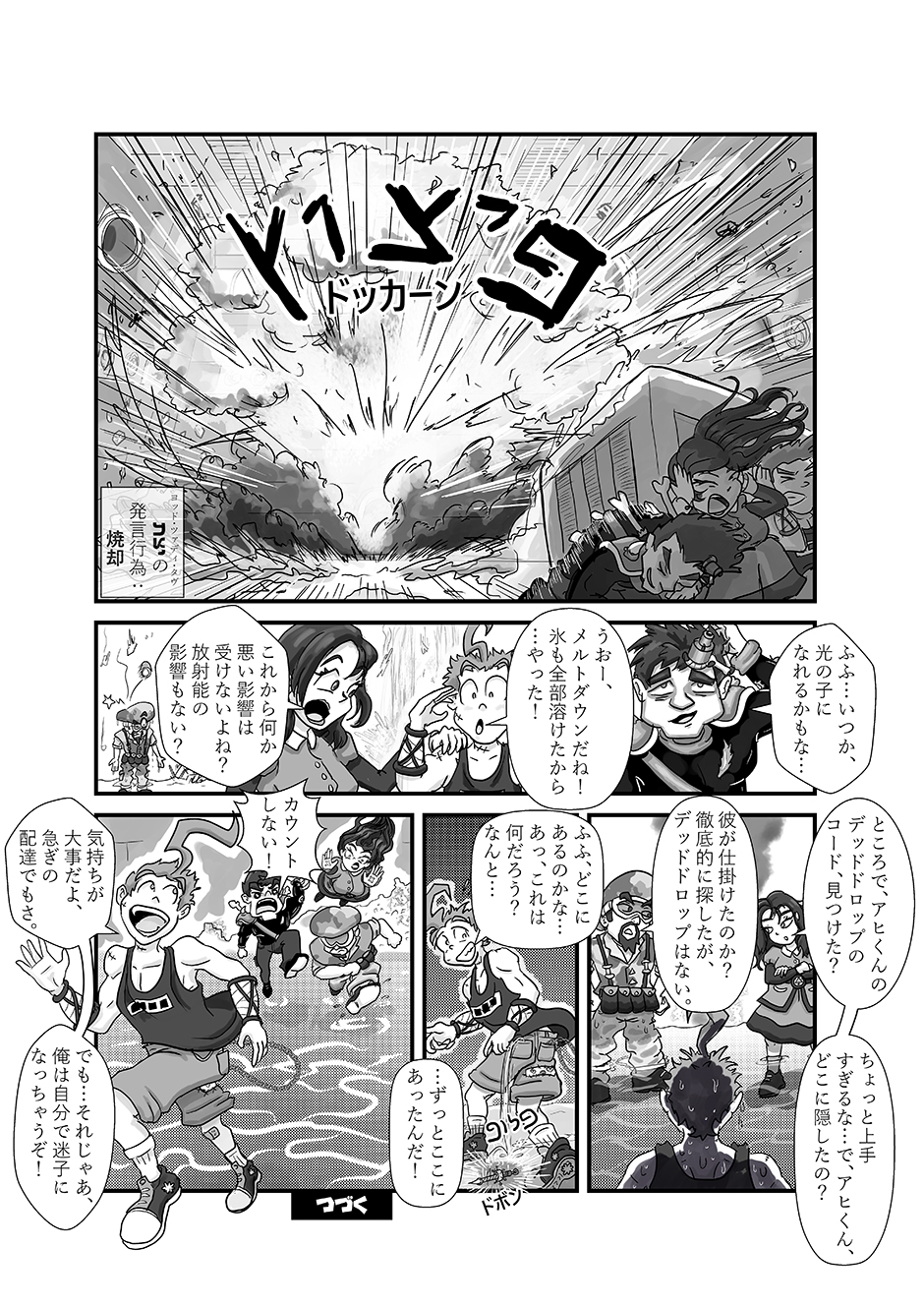
 Qeren-Or is the fourth revealed member of the Holy Tongue Society. In the linguistic world of “Milhamah,” she represents two things. One is the interjection part of speech, which makes up exclamations. Due to her nickname, “Em” (or mother), she also represents the em qeriah, Hebrew for the mater lectionis.
You must be logged in to post a comment.