Shem reaches for a miracle in Ep. 13 (Part 2)

The action turns grim in “Milhamah” Episode 13 (Part 2), and it’s up to Etgar (and maybe a miracle) to save the day!

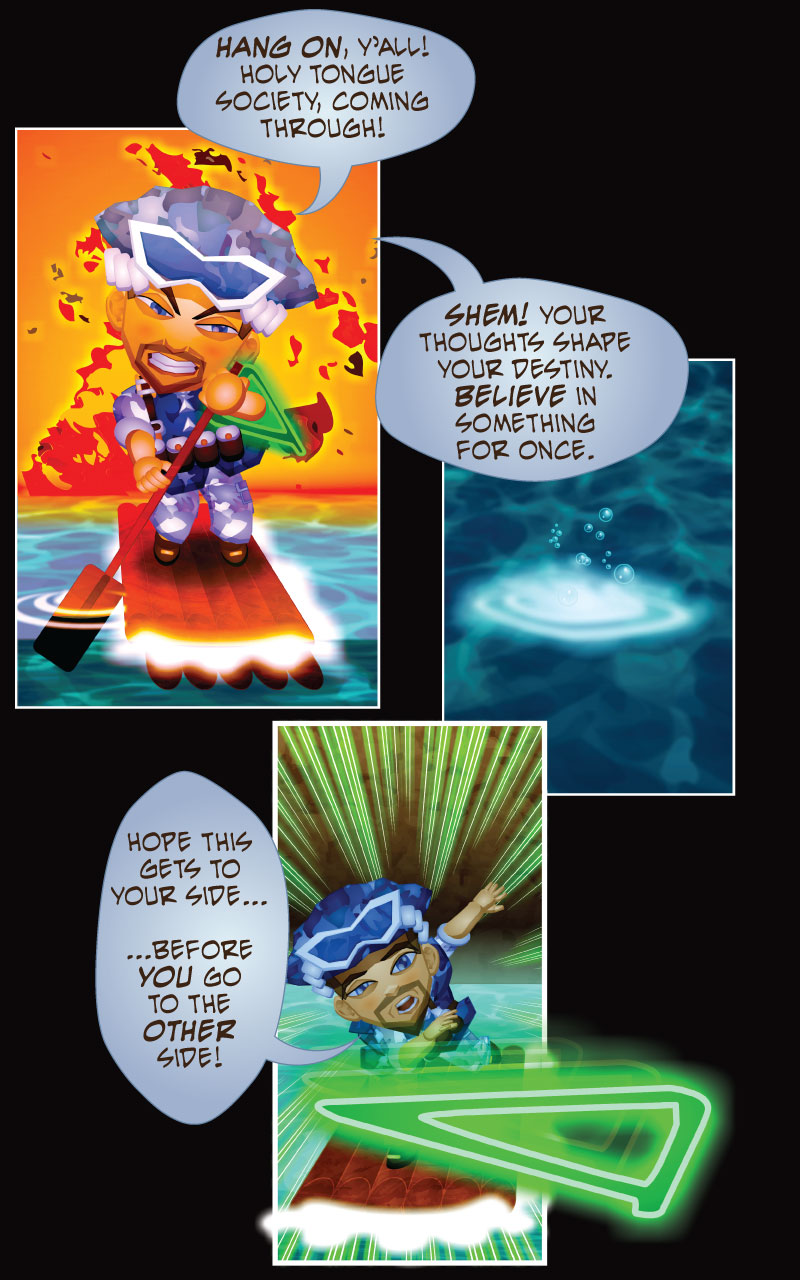
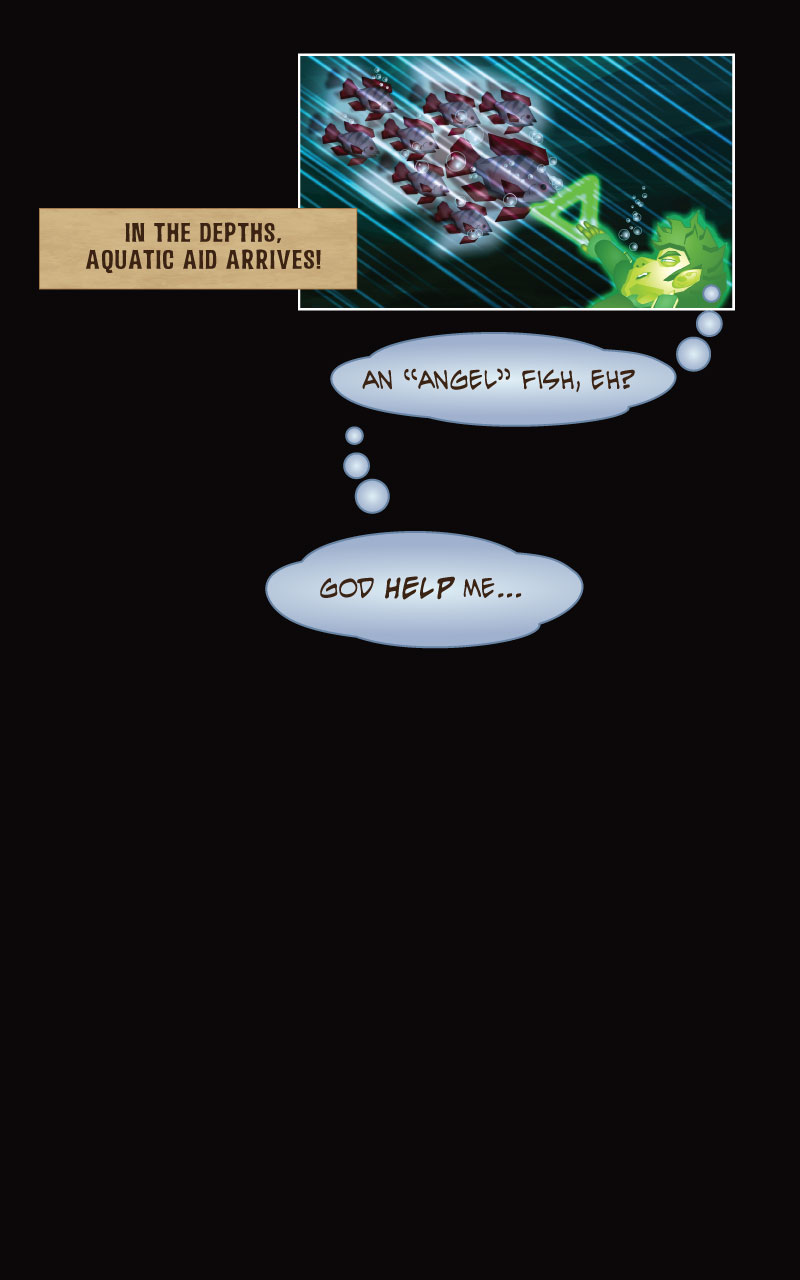
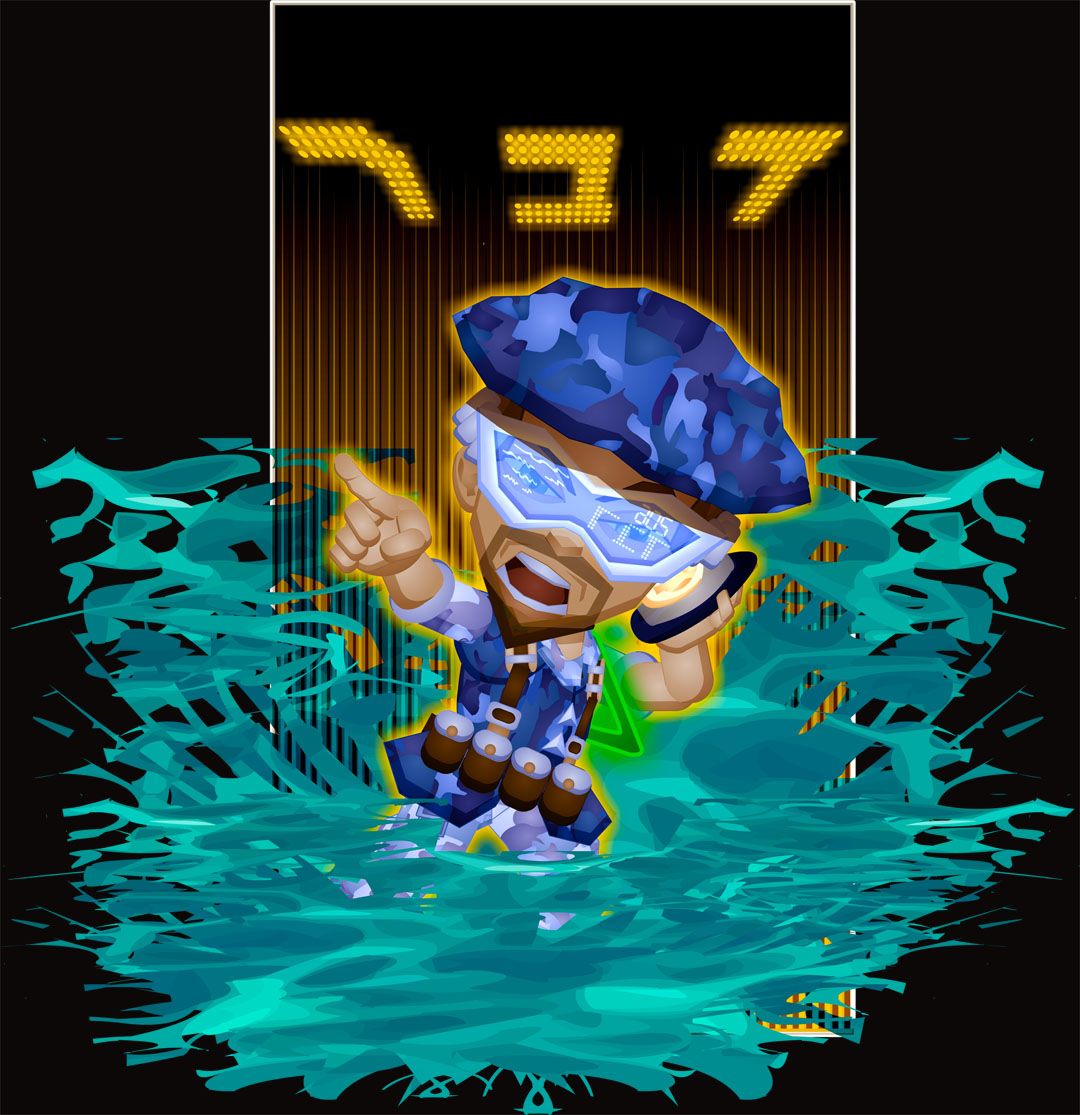
Etgar throws the Dalet toward Shem.Shem struggles with doubt as he is drowning.A fish (made up of fish) delivers a miracle.

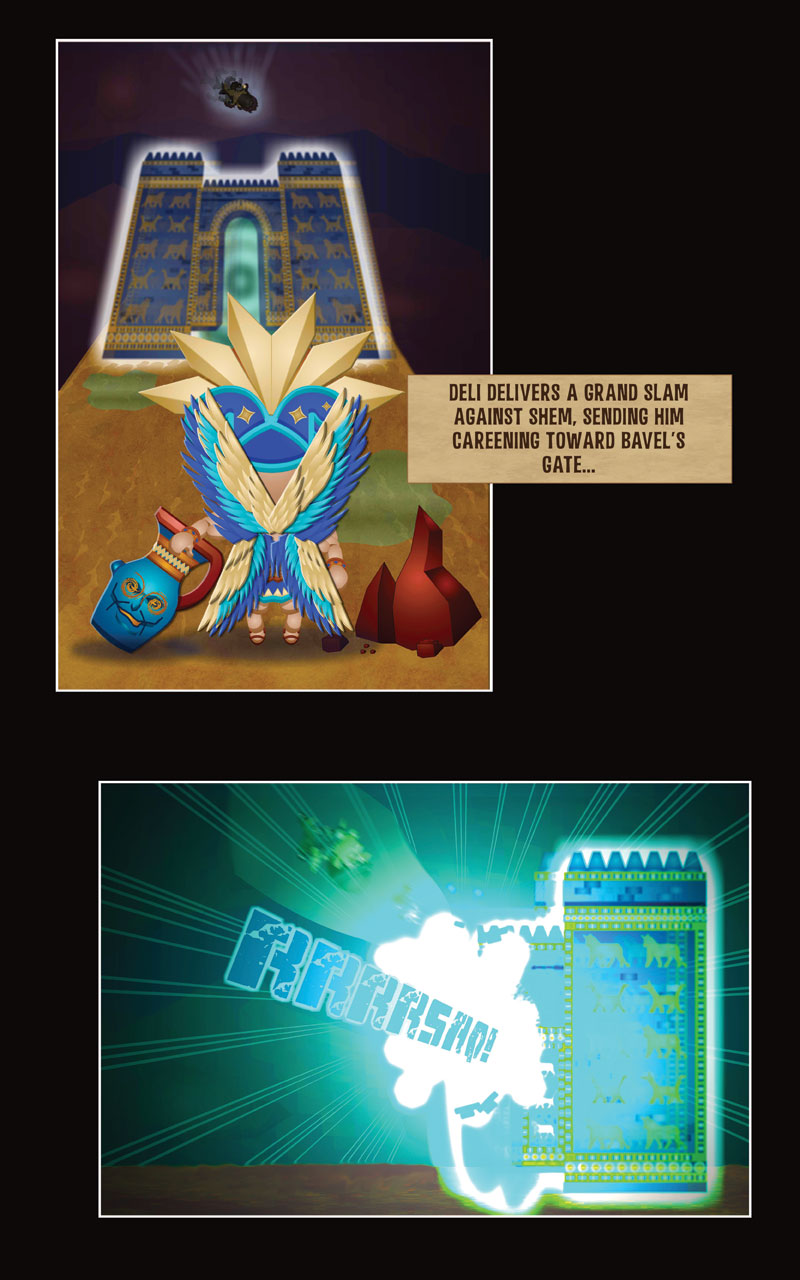
After Deli’s geyser blast hit Shem in the last scene, Etgar tosses Shem a life preserver — the Dalet foundational glyph. The glyph can alter reality through the Sapir-Whorf hypothesis, and a legend says its origins date back to God’s creation of the world.

But will it save a doubting protagonist like Shem? Only with the help of a mysterious fish (which is composed of other fish). Where did this helper come from, and why did it deliver the Dalet to a drowning Shem? The answer is unclear, but for now let’s call it a miracle.

At the end, Shem musters up enough faith and hope to make a prayer — a form of reality-altering speech that differs from the Sapir-Whorf hypothesis, or Deli’s twisted magic.  But time will tell whether divine intervention will come through…

Updates

Look forward to the next “Milhamah” scene, which should be released in a week or two! Also, I’m working on an Indiegogo campaign that I hope to have ready in July.

In addition, the Michigan Comic Con in Detroit is not too far away, so I hope to wrap up an Issue #2 by the end of July. So the upcoming month should be a busy one!

Evil gets the upper hand in Ep. 13 (Part 1)

After a hiatus to complete print Issue #1, “Milhamah: Fighting Words” is back in action as good and evil strive for the upper hand in Episode 13 (Part 1): “A Name for Himself.”

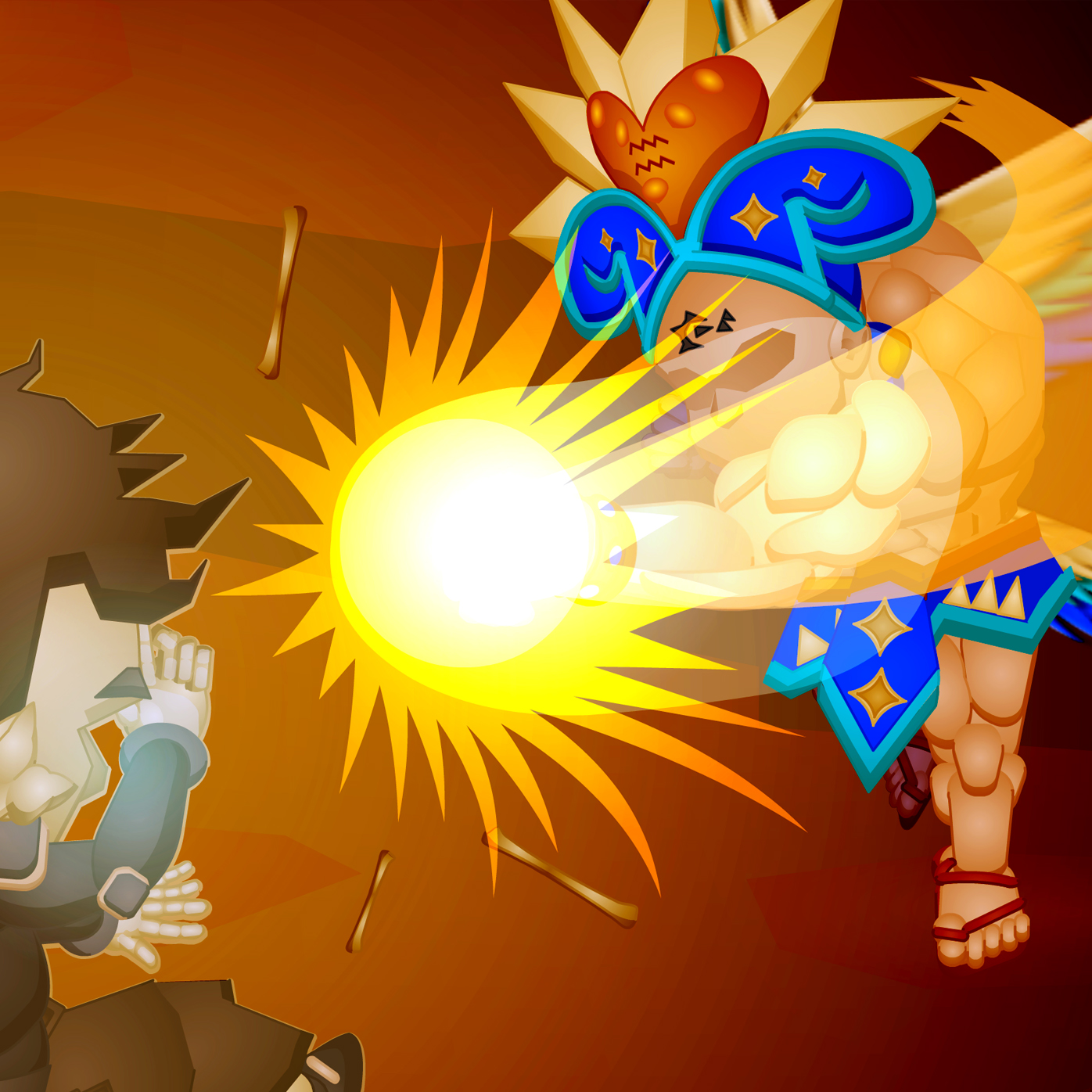
Shem gloats while dodging a punch.Deli floats to an attack position.Shem gets blasted by Deli

Despite a bout of overconfidence, Shem ‘Etzem continues to struggle in battle. This time Deli actually finishes his water extraction special attack. But does it mean a watery grave for the Holy Tongue Society’s leader? We’ll see, though he’ll need to change tactics if he wants to swim and not sink…

Prepare for a steady string of story updates throughout June. I’m strongly motivated to wrap up this fight arc by then so I can move on to worldbuilding and other characters in the “Milhamah” universe!

Issue #1 in more stores

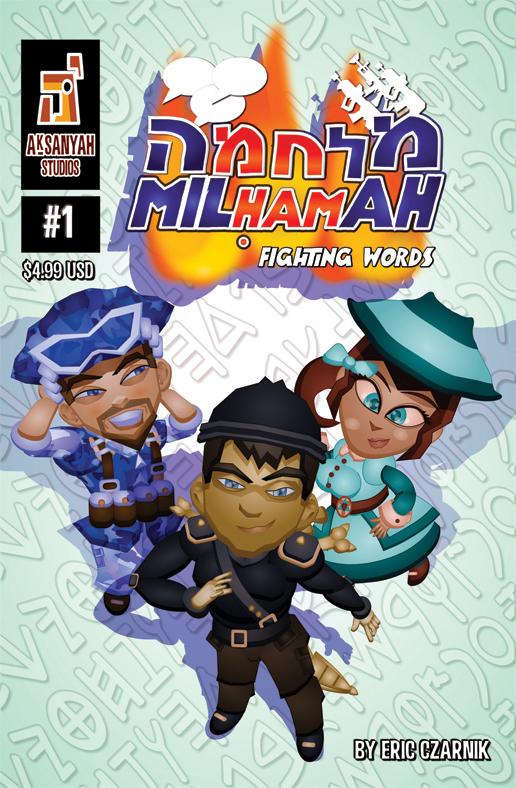
Cover of "Milhamah" Issue #1

As a side note, “Milhamah: Fighting Words” is now available for sale at two additional metro Detroit stores:

Comix Corner: 32032 Utica Rd, Fraser, MI 48026
Warp 9 Comics: 21 W 14 Mile Rd, Clawson, MI 48017

Soon I’ll set up a page that will have all the store locations where you can buy “Milhamah” comics. And don’t forget the Storenvy page!

It’s truth vs. tricks in Episode 12 (Part 1)

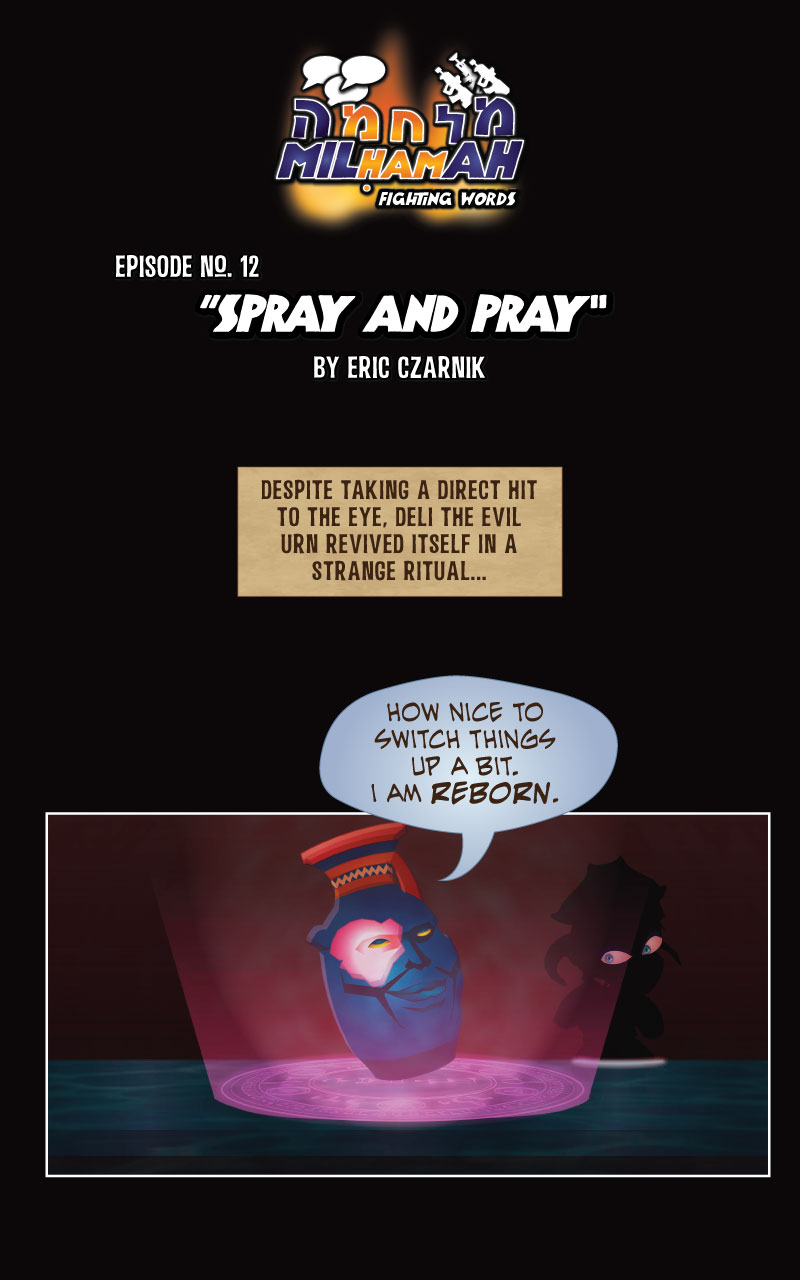
What is truth, and what is magical thinking? In Episode 12 (Part 1): “Spray and Pray,” our heroes start to explore this theme, and the answer is subtler than you might think.

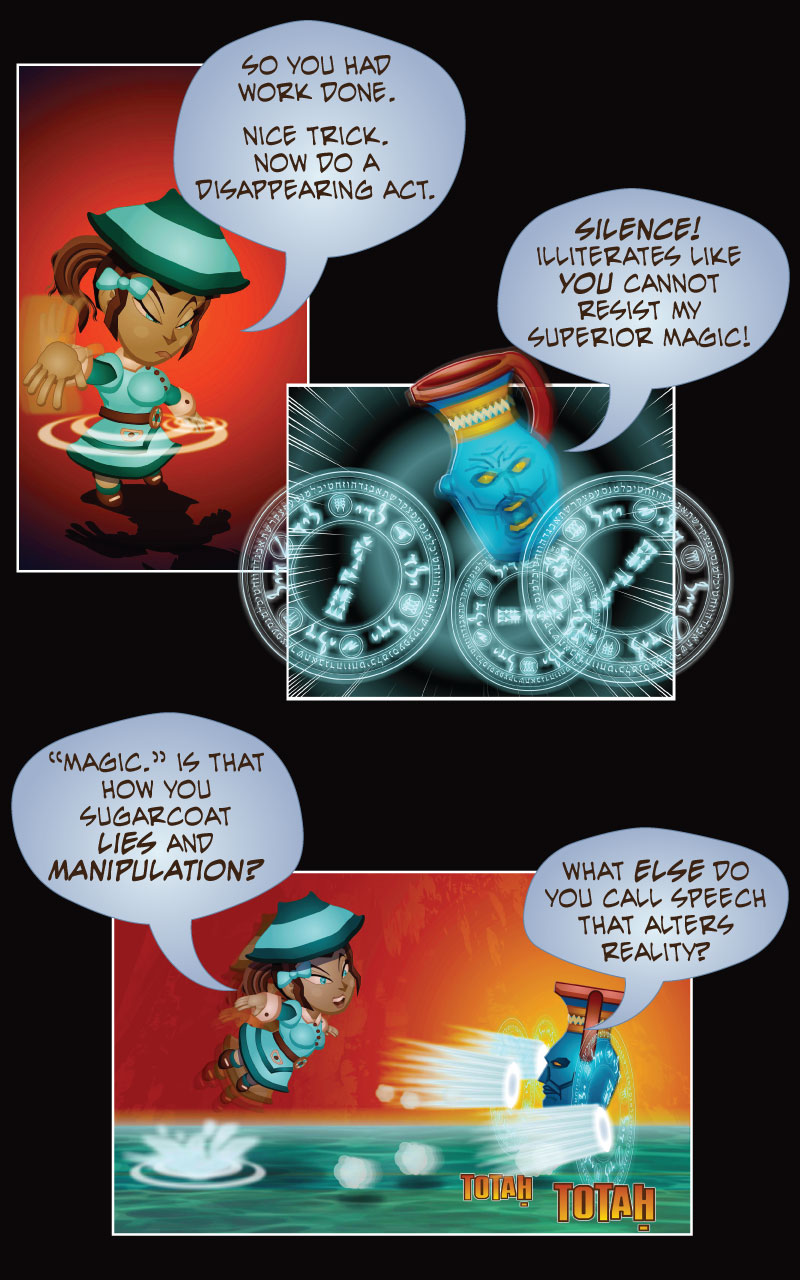
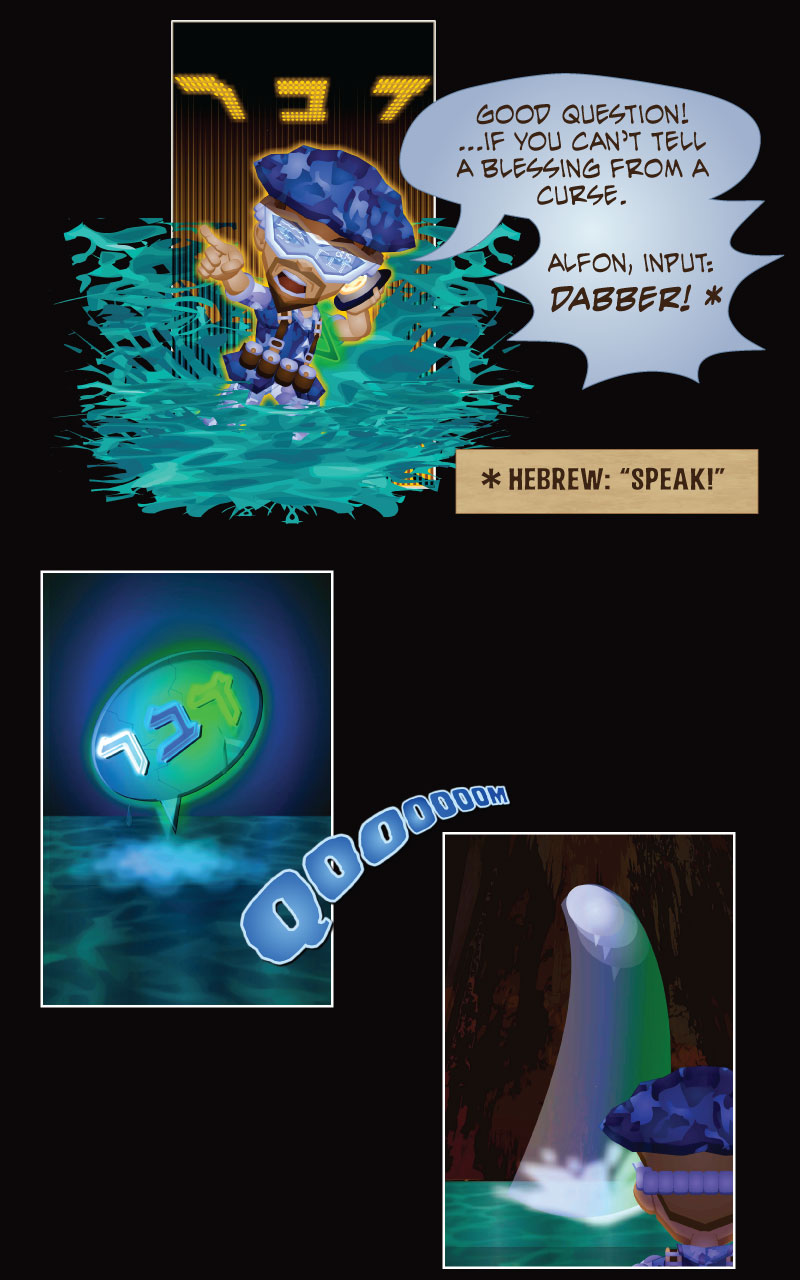
Deli recovers from his wound and talks about being "reborn." Tiqwah dismisses Deli, who starts shooting water cannons with his Bavel magic.Ep. 12-1 Page 3. Etgar calls his speech balloon. The speech balloon destroys Deli's spells. Etgar boasts that he doesn't rely on magical thinking, but the truth.

Most fantasy universes have a system of superpowers or the supernatural, and “Milhamah: Fighting Words” is no exception.

Blessed truth, cursed deception

At the end of Episode 11, Deli speaks an Akkadian shoresh root (based on birth) to repair the hole in his face. And now he uses another root to fire water cannons.

In “Milhamah,” the Bavel Empire (or “macrostructure”) corrupts and twists languages in order to replace them with nonsense. Their motive is to assert control and manipulate reality for selfish, destructive ends.

Deli calls this “magic,” but Tiqwah calls it lies and manipulation. In terms of worldbuilding, she’s right. Bavel seeks to impose its will to power through its quest to destroy the Holy Tongue.

On the other hand, the Holy Tongue is associated with candor, accuracy, and “telling it like it is.” In this episode, Etgar sets his alfon to use the dalet-bet-resh (דבר) root. He sends out a roaring speech bubble to destroy Deli’s magic.

Under the Holy Tongue’s authority, our heroes use speech as a prophetic rebuke, speaking truth to power.

The Sapir-Whorf hypothesis

One more thing: Etgar mentions the Sapir-Whorf hypothesis. This provides the scientific explanation for why the “Milhamah” can use the shoresh roots to enhance their alphabet abilities.

As the link explains:

The Sapir-Whorf hypothesis is the theory that an individual’s thoughts and actions are determined by the language or languages that individual speaks. The strong version of the hypothesis states that all human thoughts and actions are bound by the restraints of language, and is generally less accepted than the weaker version, which says that language only somewhat shapes our thinking and behavior.

Read more on the topic here. But basically, the “Milhamah” characters’ thoughts, words and outlook determine their reality and destiny. Those who prize truth and goodness turn their Holy Tongue alphabet powers into blessings. Likewise, characters who use language to enslave others perform magical curses.

And in that context, think of the curses that lurk in the background of our own real lives. What hells are often unleashed by the quick fix, the empty “something for nothing” promise, the slick corporate marketing pitch, or the focus group-tested political sound bite!

All of this only scratches the surface to how language shapes the “Milhamah” world. Now that we touched on truth, we’ll see how faith shapes the Holy Tongue Society in the next episode. Hope you’ll join us and keep reading!

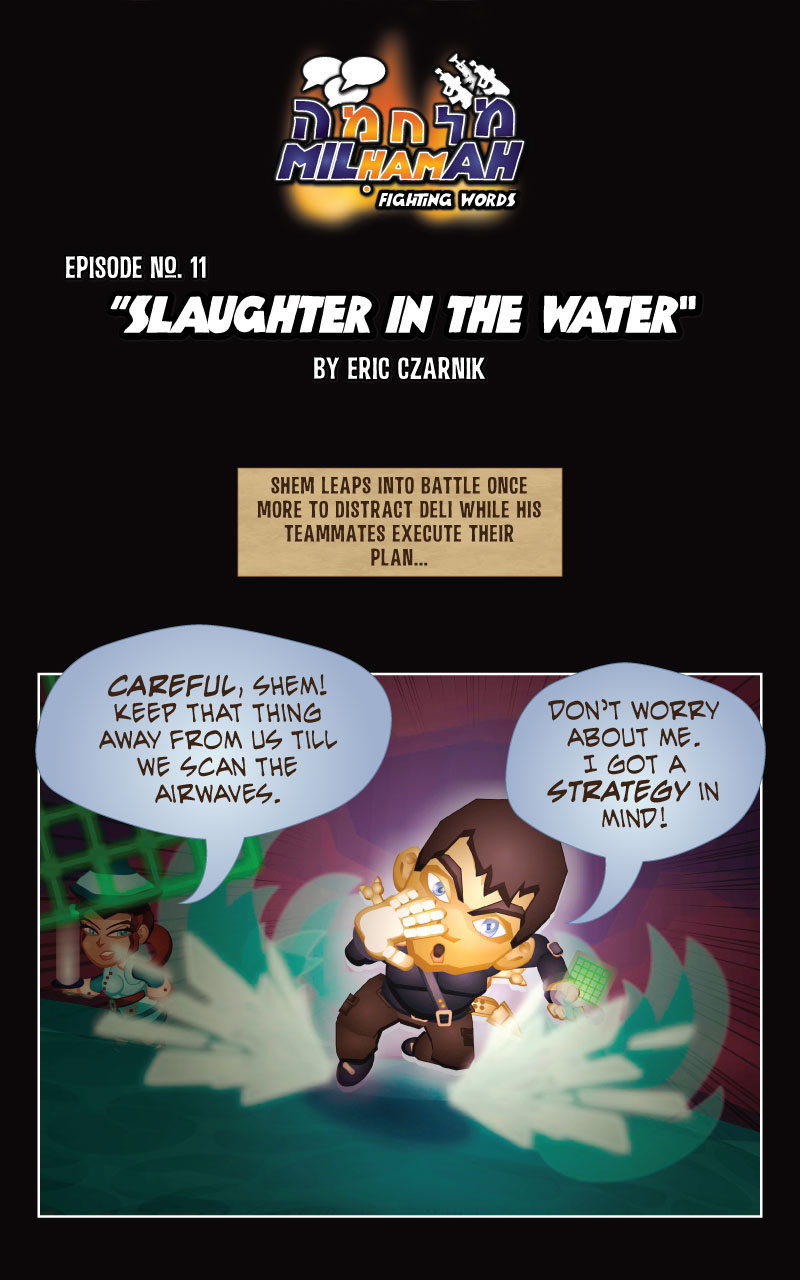
Episode 11: Slaughter in the Water (Pt. 1)

This new episode’s first part isn’t exactly a slaughter, but good and evil go at it for another round. The last time “Milhamah: Fighting Words” had this much fighting between Shem and Deli, Shem took a walloping. Check and see what happens here…

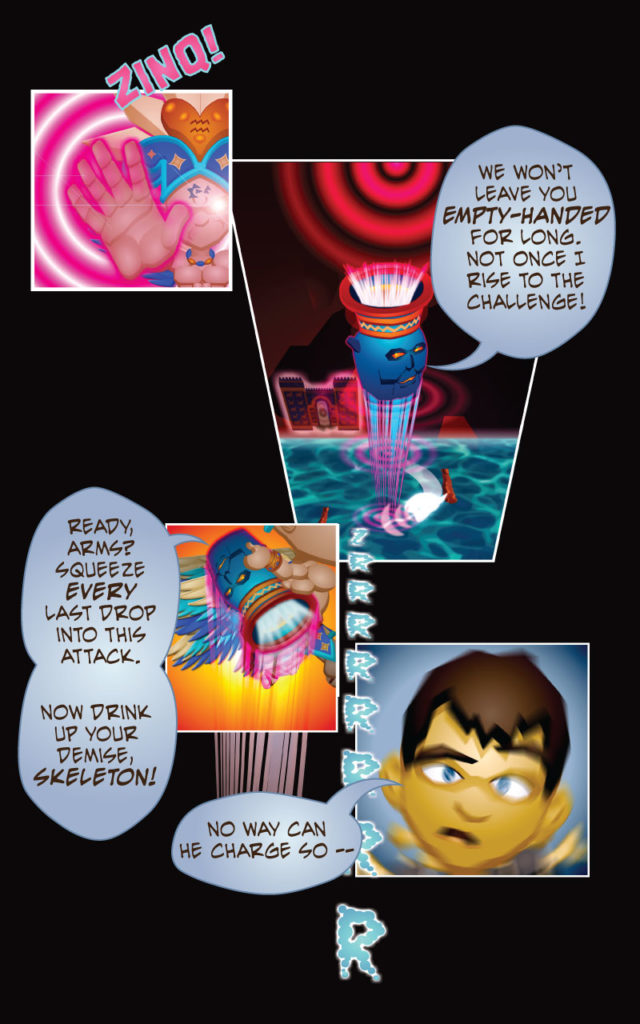
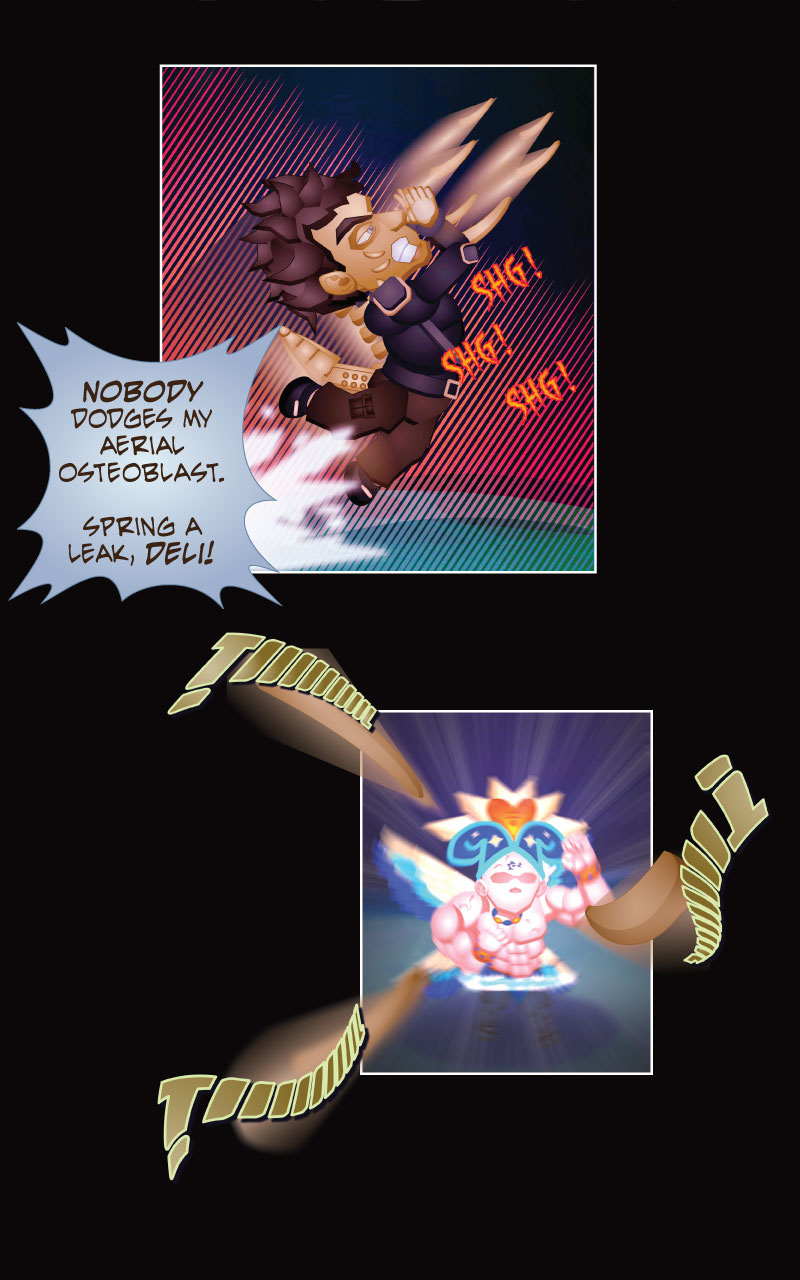
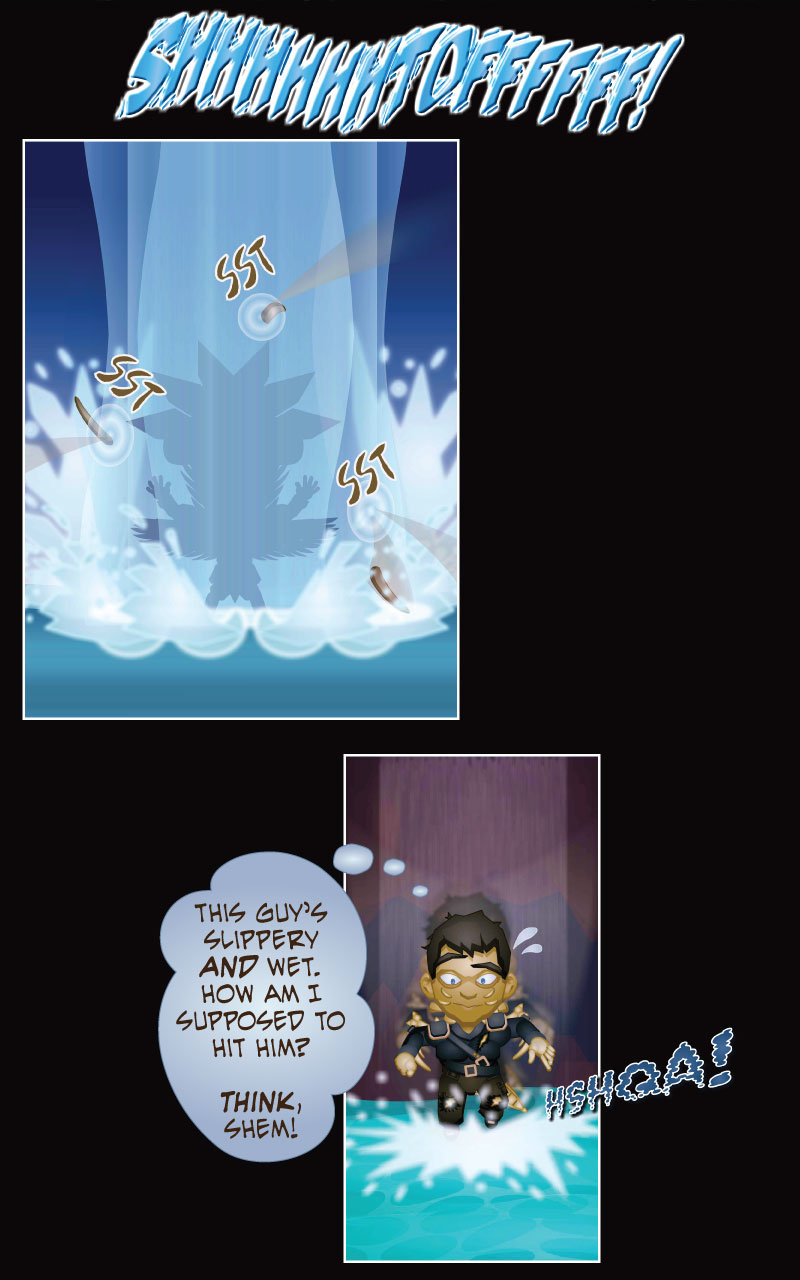
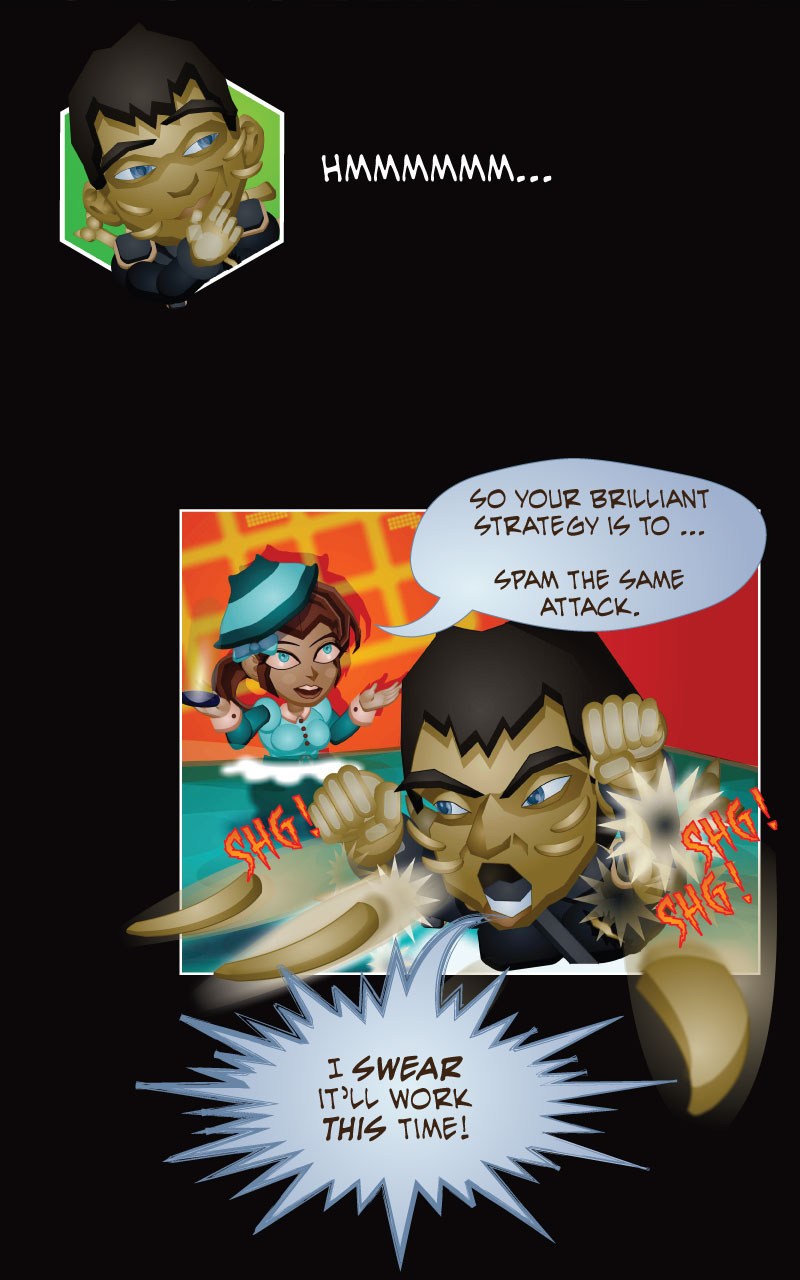
Shem returns to battle.Shem fires an "osteoblast" of bone shards.Deli deflects the attack.Plan B looks a lot like Plan A.

Action scenes always take more time to design than talking head panels, but the end result is often satisfying. This time I tried to make things more dynamic by breaking the panel’s perspective with Shem’s “osteoblast” bone shard missiles.

I also added more sound effects and used the negative space outside the panels to contribute to the storytelling. I’ll probably do that more, especially in my remastered print edition. The goal is to begin selling copies in April with a couple of comic cons on the horizon!

Storywise, while Shem’s limited attack moves are a punchline here, I look forward to giving him more to work with in the scenes to come. Plus we need to see what Etgar and Tiqwah are doing in Episode 11 Part 2!

In other news…

Just a reminder: You can also see “Milhamah” comics on Tapas and Webtoon. I’m trying to grow those subscriber bases, so if you use those sites, you can get automatic notifications when new episodes come along.

Also, you can vote for “Milhamah” on the Top Webcomics page site, which draws a lot of webcomic fans. I’ll be promoting this more in the near future. Help this series climb the ranks!

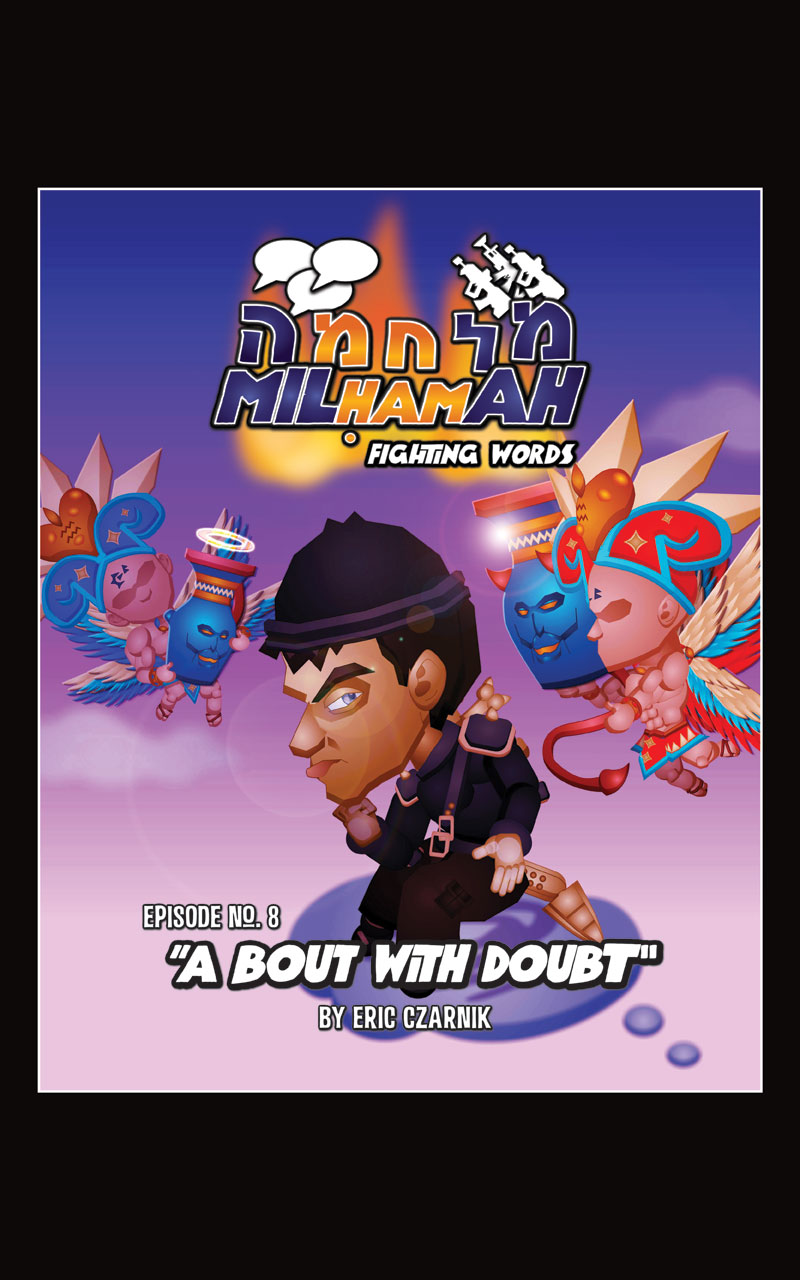
Episode 8: A Bout with Doubt

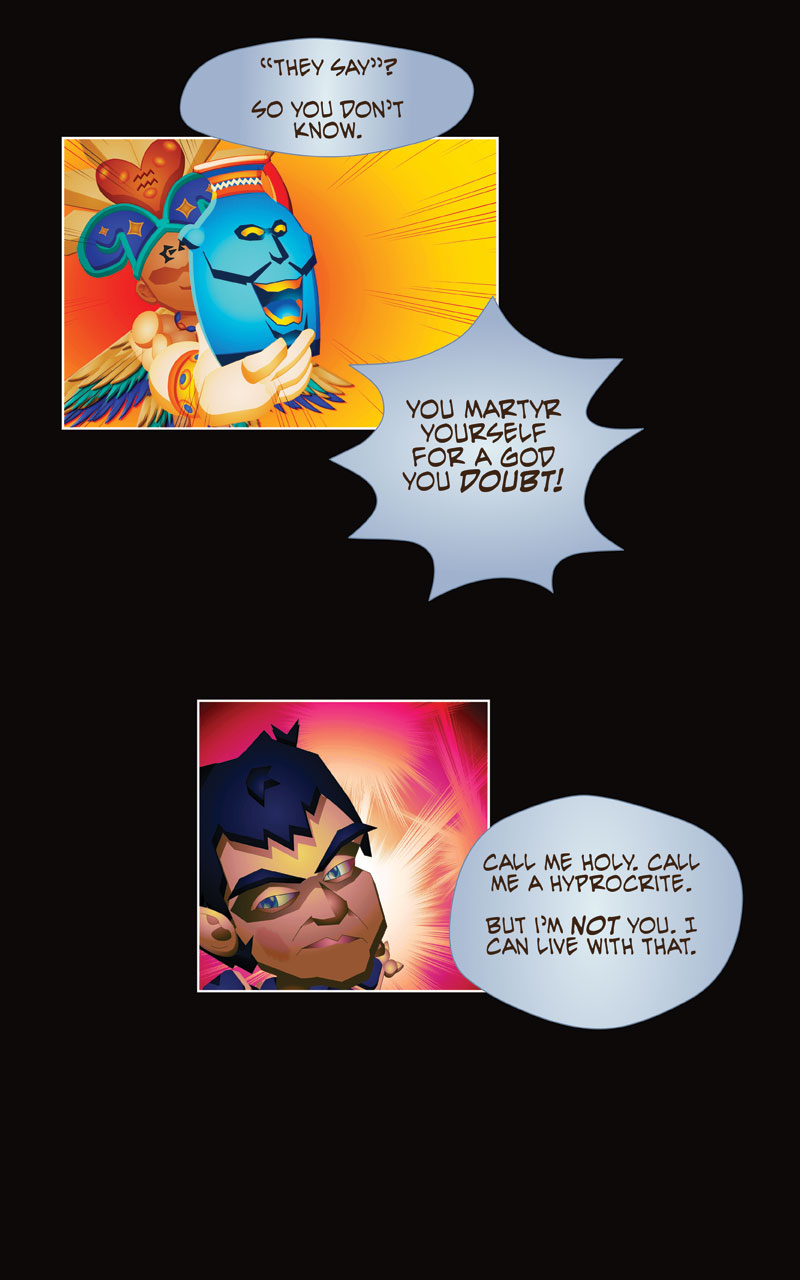
In both fiction and in real life, evil adds insult to injury. It gloats and humiliates. It tries to make you doubt who you are and what you believe in. Sometimes it may even tempt you to question who God is.

In “Milhamah: Fighting Words” Episode 8, Shem ‘Etzem is faced with that same sort of evil from the Bavel Empire’s agent, Deli. Deli puts Shem up against the wall and then questions Shem’s loyalty to his own cause, the Holy Tongue Society.

Deli slanders Shem as an ogre and demon, but only looks at distorted outward appearances. For the record, Shem is human and not only has to fight a powerful foe, but people’s expectations over what a virtuous person should look like. Note also how the Bavel Empire accuses its critics not only of hypocrisy, but blasphemy!

This episode is also the first time that the 22 Foundational Glyphs are shown. These are tied to a non-biblical story of how God created the world through the 22 Hebrew letters.

In the fictional world of “Milhamah,” the letters (seen here in Phoenician or Ketav ‘Ivri “Paleo-Hebrew” style) are not mystical but tangible. After all, they exist in a world where grammar and parts of speech take human form.

As we end Episode 8, our hero may be conflicted and broken, but he’s not destroyed yet. Likewise, let’s persevere in our own lives — even when we don’t have all the answers neatly figured out.